Tulsa Tech students highlight cyber threats at annual Hack House event
Tulsa Tech students demonstrated everyday cyber threats and personal data risks to the Tulsa community at the school's annual Hack House event.
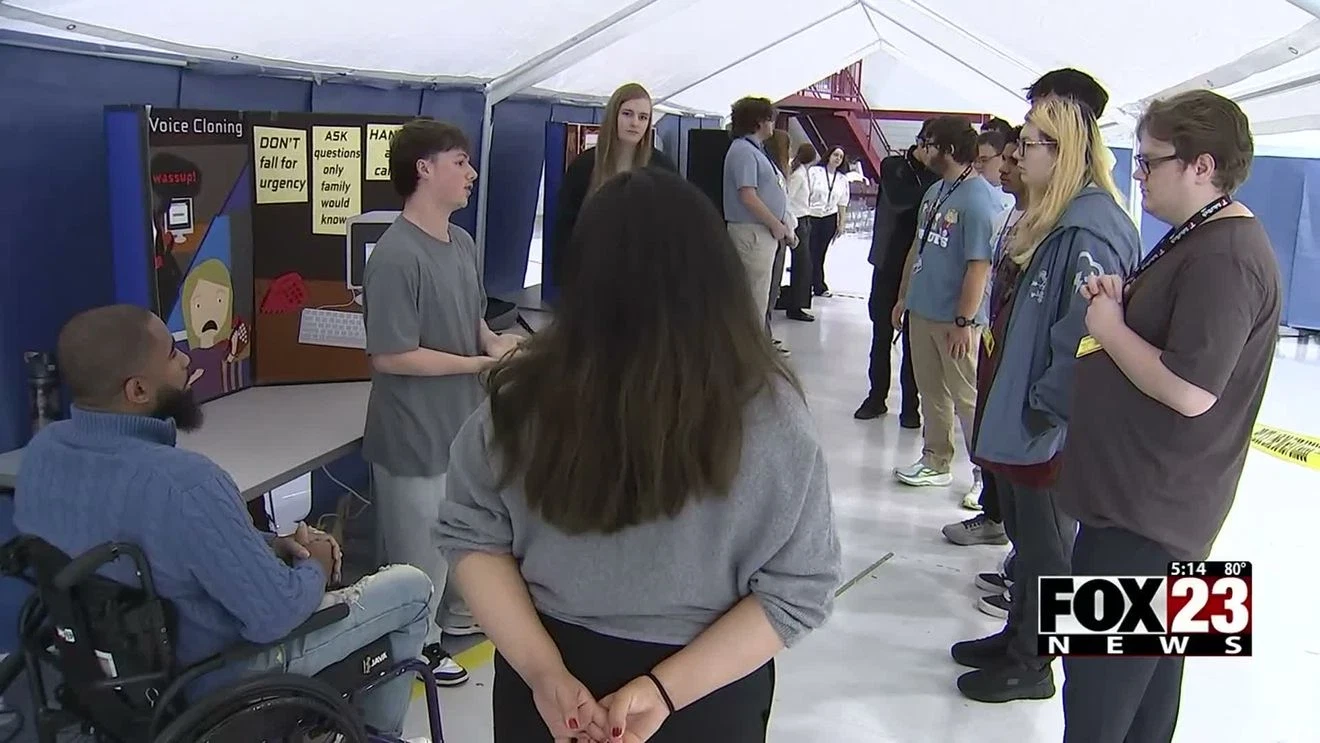
Tulsa Tech students demonstrated daily digital hazards to the Tulsa community during their annual Hack House event. The presentations showed how routine online habits can quickly compromise personal and financial details. October is Cybersecurity Month.
The technical school has hosted the gathering for about 10 years. Students research and design the interactive demonstration to shine a light on digital risks. Threats include newer schemes aimed at credit cards and attempts to infiltrate personal devices.
“It’s just a way for us to inform the community on different cybersecurity risks,” said Johnathan Riggs, a Tulsa Tech cybersecurity student.
Riggs stated that anyone can fall victim to digital schemes. He noted that children and elderly people are often primary targets. He urged people to be cautious of unidentified messages that pressure them to act quickly.
“Always double check every message you get from a bank or someone who holds important information. Make sure they are who they say they are. It’s just trying to make sure everyone is real.”
Students said one frequent scheme is phishing. In these scams, attackers pose as trusted groups to obtain funds. They said these fraudulent notices can mimic toll road services or bill-related companies.
Learners identified frequent missteps that give attackers access to private data. Risky behaviors include:
- Scanning random QR codes
- Sending personal information to attackers
- Using similar passwords across multiple accounts
Paul Holmes, also a Tulsa Tech cybersecurity student, said stronger safeguards can make a difference. Holmes said longer passwords and two-step verification rank among the best protective measures.
“Having a face scan, fingerprint, biometric, it can be more secure,” Holmes said.
Holmes said two-factor authentication helped him when an intruder reached his personal email. The extra security layer blocked the unauthorized access.
“I was saved by one of those one time. I had a really weak password on my email and someone guessed it. My two-factor authentication by Google saved my account.”
Federal authorities track digital scams nationwide. In 2025, the FBI reported more than a million cybercrime cases costing victims over $21 billion.
Students warned that personal lapses can create broader harm. A single worker can compromise an entire company if workplace security measures are ignored.
Cybersecurity education programs teach students how computer networks operate and how to secure digital data from unauthorized access. Tulsa Tech offers career training programs in technological and industrial fields across Tulsa.
The annual event provides hands-on demonstrations to help local residents safeguard their personal accounts.