Jonathan Brooks outlines Tulsa police accountability ahead of oversight vote
Tulsa Police Chief Jonathan Brooks addressed city leaders on internal accountability as councilors consider a proposed civilian police oversight board.
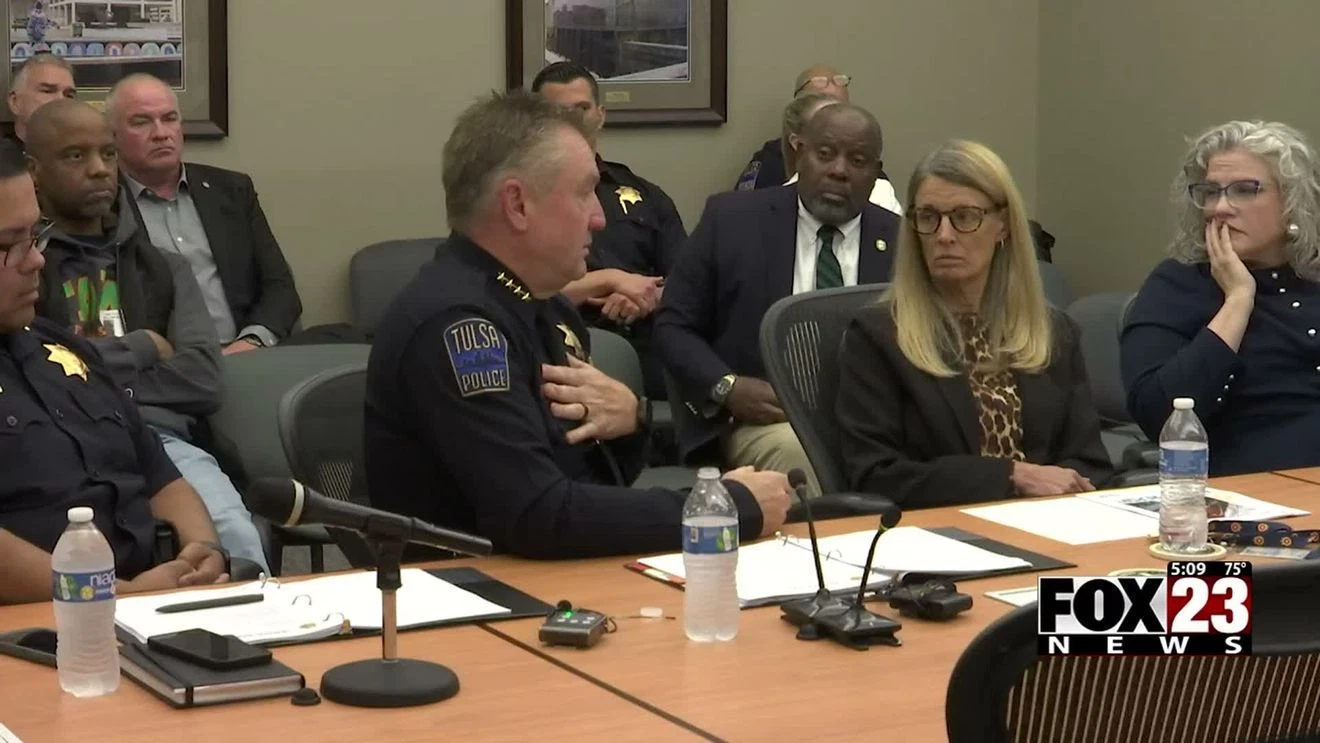
Tulsa Police Chief Jonathan Brooks addressed city leaders Wednesday during committee hearings on proposed municipal reforms. His statements address how public complaints proceed before lawmakers vote on independent reviews. The proposed ordinance would establish the Office of Independent Review and Oversight of Public Safety. It would also create a director position and a civilian oversight board.
The office would oversee several city public safety divisions. These include police, fire, emergency management, animal services, code enforcement and city security. Councilors questioned Brooks on Wednesday about complaint investigations and public records access.
“I support accountability,” Brooks said. “I support transparency and I also support the men and women out on the streets.”
Brooks told Tulsa council members he was on his 14th day as chief. Residents can file complaints by contacting Internal Affairs, emailing the department or visiting a station. Internal Affairs reviews these submissions to decide how each inquiry proceeds.
Supervisors handle some cases. Others stay with Internal Affairs or go to the municipal human resources department. Completed files move up the chain of command directly to the chief.
A separate process exists for reviews of officer force. The 2025 annual report lists force statistics:
- 364 total non-lethal force incidents reported
- 326 instances deemed within policy
- 12 instances ruled outside policy
- 26 force reviews marked pending
- 826 physical control holds without injury
The total non-lethal count excludes those 826 control holds. Councilors asked how these internal reviews change daily policing practices. “Part of that transparency piece is, you know, what are we going to do different?” one councilor asked.
Brooks noted plans for community listening events. He is also researching a public transparency dashboard for the website. “I’m trying to work through how we could have a transparency dashboard on our website to automatically answer the questions that I’m getting from the community,” Brooks explained.
Brooks raised concerns about whether a board helps him reach the public directly. “I can see it harming what I want to do in this instance. I want to go directly to the community, not just a small group.”
One councilor noted the oversight measures extend past criminal accusations. “I did want to clarify that this proposal we’re putting forward is not just focused on criminality,” the councilor said.
Elected officials in Tulsa also addressed community trust. “Trust and transparency is earned by citizens knowing that they can criticize their government and that we respond, and that includes us,” a councilor stated.
City councils consider regulatory ordinances through public committee reviews before taking formal floor action. Council members often examine department statistics and command staff procedures when drafting external oversight rules.
The ordinance appeared for possible action on Wednesday’s 5:00 p.m. meeting agenda. Lawmakers can approve, amend, reject or postpone the measure. Decisions remain pending.